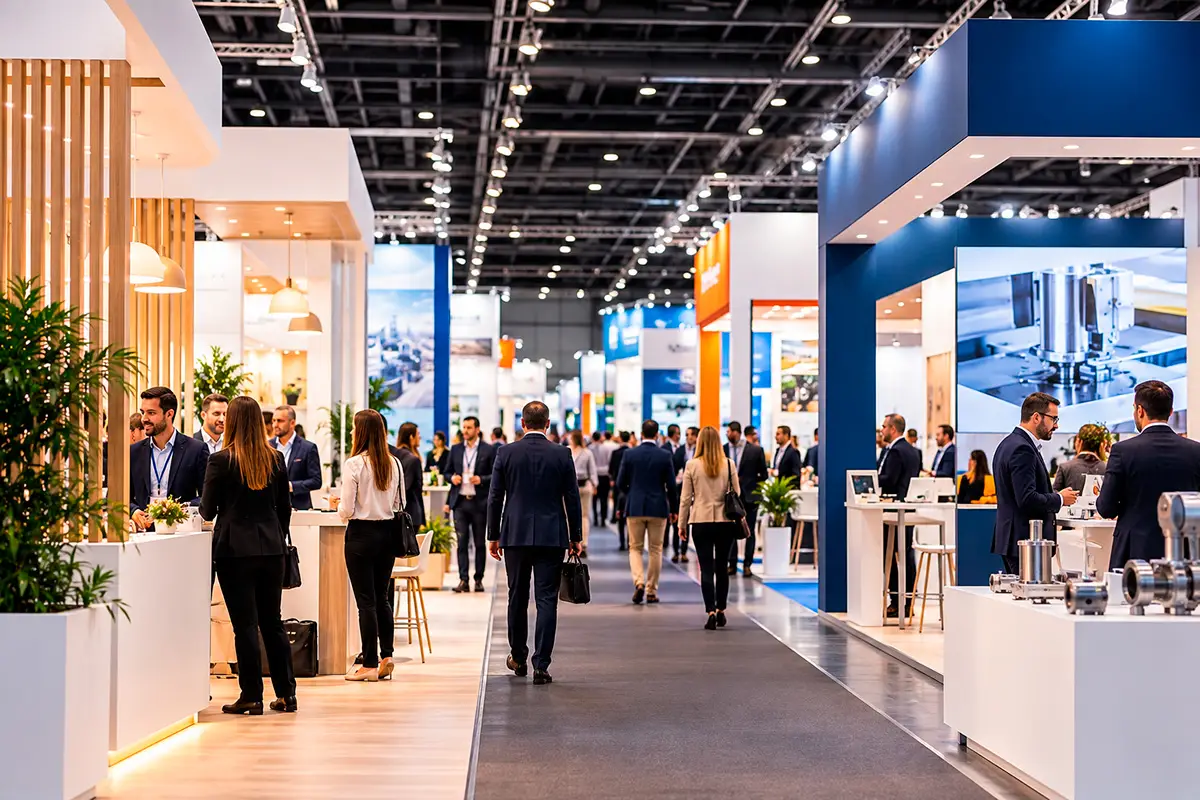
A fair lasts a few days, but The impression a booth makes starts in just a few seconds.. While some exhibitors manage to consistently attract visitors, others go practically unnoticed. The difference rarely depends on the size of the space. It usually lies in the planning and the way the brand is presented.
The setup of a booth greatly influences the visibility and comfort of the sales team, as well as the experience of those who approach. Every decision, from the furniture layout to the lighting, heavily conditions the final outcome. If the goal is tgenerate quality leads and strengthen the company's image, it is advisable to prepare every detail in advance.
Why does booth setup influence the results?
The stand represents the company throughout the entire event. It is the first point of contact between the brand and attendees, so it must convey professionalism at first glance.
A well-organized space facilitates business conversations, invites visitors to stay longer, and helps them remember the company once the trade fair is over. In contrast, a cluttered or non-functional booth hinders customer service and reduces business opportunities.
Preparing the setup with a clear strategy allows you to make better use of the investment made in the event.
Tips for assembling trade show booths
Let's look at the different aspects you should keep in mind for setting up the booth at a trade fair.
1. Design the space keeping the visitor's journey in mind.
Before placing furniture or decorative elements, it is advisable to imagine how people will move within the booth. The entrance should feel natural and allow visitors to access without obstacles.
Meeting areas need a certain amount of privacy, while demonstration areas must remain visible from the aisles. When the visitor flow is intuitive, visitors stay longer and business conversations happen more easily.
A practical design makes the team's work easier and improves the experience of those who approach the exhibition stand.
2. Use a consistent brand image
The colors, lettering, and graphic elements must align with the company's visual identity. Consistency conveys trust and helps the brand remain recognizable even from a distance.
It is advisable to use brief, easy-to-read messages. Attendees walk through dozens of exhibition stands in just a few hours, so an excess of information usually produces the opposite effect to the desired one.
Large-format images and simple visual communication generally offer better results than text-heavy panels.
3. Take care of lighting and visibility
Lighting completely changes the perception of a booth. Well-distributed light highlights products, creates a pleasant atmosphere, and directs attention toward the most important points.
Whenever possible, it is worth incorporating specific lighting to highlight displays, exhibitors, or customer service areas. The objective is to achieve an attractive space without creating uncomfortable reflections or shadows.
Visibility from different angles is just as important. A visitor should be able to identify the brand even before reaching the booth.
4. Avoid overcrowding the booth with unnecessary elements
There is a temptation to make use of every available square meter. The result is usually a cluttered space where it is difficult to move around and have a conversation.
It is preferable to leave clear areas that facilitate movement. Each element must fulfill a specific function, whether it is displaying a product, offering information, or creating a comfortable environment to serve visitors.
When the design breathes, the stand conveys higher quality and allows attention to be focused on what really matters.
5. Prepare the setup with plenty of time
The best setups begin weeks before the trade show opens. It is advisable to review blueprints, confirm measurements, coordinate suppliers, and verify that all materials will arrive on time.
Proper planning reduces unforeseen issues during assembly and avoids last-minute rushes. It is advisable to create a schedule that defines the deadlines for transport, installation, and dismantling.
Dedicating time to this phase makes it possible to focus on the event with the peace of mind that everything is prepared.
6. Opt for quality materials and an impeccable finish
Brand perception begins long before having a conversation with the visitor. A booth with polished finishes, durable materials, and a well-executed installation conveys professionalism from the very first moment. On the other hand, flaws, unstable structures, or deteriorated elements create a negative impression that is difficult to correct.
It is advisable to check every detail before the trade fair opens. Cleanliness, the correct placement of graphics, and the condition of the furniture influence the image projected by the exhibitor. Good execution adds value to the brand and helps build trust among attendees.
7. Create comfortable spaces for conversation
The goal of many companies participating in a trade show is to generate business leads. To achieve this, the booth must offer an environment where it is possible to hold conversations comfortably and without constant interruptions.
If space permits, it is worth setting aside an area dedicated to meetings. It doesn't need to be completely enclosed, but it should be quiet enough to talk with potential clients, present proposals, or address questions with a degree of privacy. When visitors feel comfortable, they usually spend more time in conversation, and the experience turns out much more positive.
8. Integrate technology with a clear purpose
Screens, interactive counters, or audiovisual resources can enrich the visitor experience, provided they respond to a specific objective. Incorporating technology solely for its visual impact rarely adds value if it does not help communicate the company's message better.
A corporate video, a live demonstration, or a digital catalog makes it possible to showcase products and services more dynamically. It is advisable to check the operation of all equipment before the event begins to avoid issues during the trade show. A smooth presentation conveys confidence and improves brand perception.
9. Think about the functionality for the booth team
The design should facilitate the visitor experience, although it is also important not to forget the needs of the people who will be working at the exhibition stand all day long. Storage space, a small rest area, or a layout that allows for easy movement makes daily work much more comfortable.
When the team has everything they need close at hand, service is more agile and interruptions are reduced. This internal organization has a direct impact on the quality of the service offered to attendees and makes it possible to approach the trade fair with greater efficiency.
10. Adapt the assembly to the fair's objectives
Each event brings together a different audience and addresses specific needs. A stand designed to present a new product does not require the same layout as one intended for holding business meetings or conducting technical demonstrations.
Before defining the design, it is advisable to establish what is expected to be achieved during the trade fair. If the purpose is to capture leads, the space must encourage interaction with visitors. If the priority is to showcase a product, it is advisable to give it maximum prominence within the stand. When the setup responds to a well-defined objective, each element fulfills a function and the investment yields a higher return.
From Rck Stands, we invite you to consider the challenges of booth assembly and count on our help for the management of your project. Contact us now.